
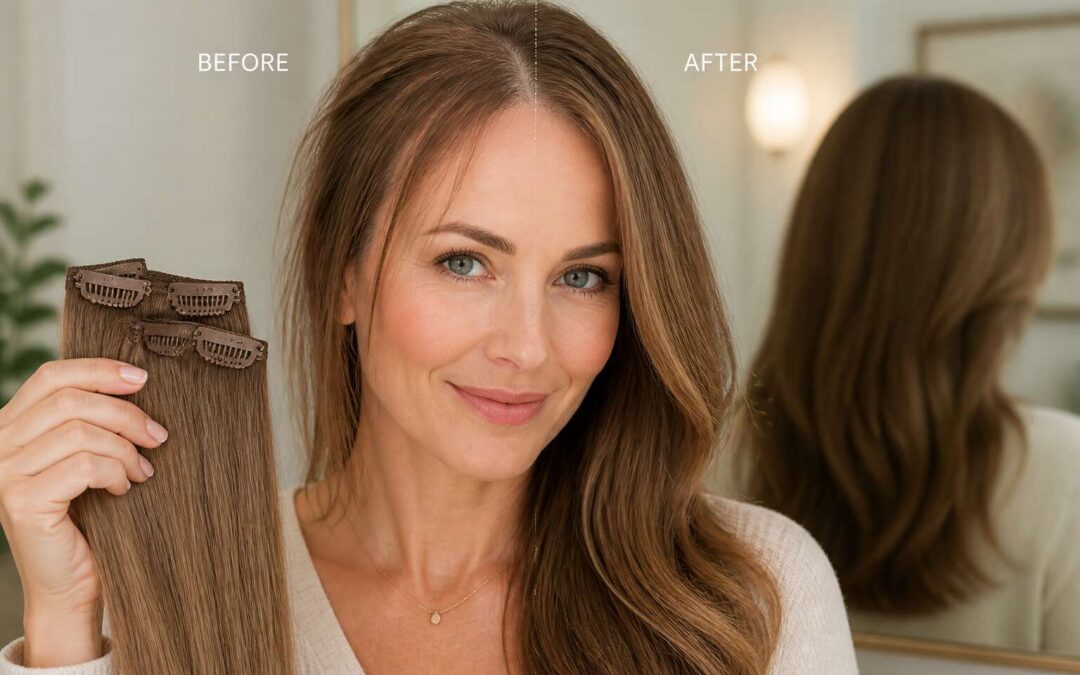
Understanding Thin Hair and Hair Extensions
Why Thin Hair Needs Special Consideration
Thin hair carries a unique fragility that thicker strands never confront. The scalp’s natural oil production and the reduced volume of each shaft demand a gentler approach. When seeking the best hair extensions thin hair, the primary enemy is added tension at the root. Many South African women discover that the best hair extensions thin hair options rely on lighter, breathable bases.
You must evaluate three critical factors:
- Weight of the weft or tape
- Placement density along the parting
- Strand texture compatibility
Each element influences whether the extensions feel like a natural enhancement or a pulling burden. A wrong match can accelerate shedding, turning a cosmetic choice into a health problem. Careful selection preserves what little volume you already possess.
Common Causes of Hair Thinning
As a stylist, I frequently witness a 2023 clinic survey that placed 42% of Cape Town women experiencing noticeable thinning before age forty. Thin hair indicates reduced follicular density and a fragile cuticle. It is not purely cosmetic. Understanding the root causes determines whether a transformation is safe.
The most common origins are predictable. Genetics dictates baseline density. Hormones accelerate loss; postpartum shedding is notorious. Thyroid imbalances erode volume. Nutritional deficiencies, especially low ferritin, starve the follicle. Chronic stress pushes strands into premature resting phases.
- Androgenetic alopecia remains the leading driver.
- Telogen effluvium from physical stress peaks after illness.
- Chemical relaxers and over-bleaching degrade the shaft.
- Traction alopecia from tight braids permanently damages roots.
These factors weaken the foundation. A woman must assess her own triggers before seeking the best hair extensions thin hair. Knowing your specific cause, whether hormonal or mechanical, prevents worsening the condition. Extensions should never exploit a vulnerability. Instead, they must align with the scalp’s current tolerance level.
Different Types of Hair Extensions for Fine Hair
Thin hair changes how you choose extensions. A heavier installation tugs at roots already working hard to hold on. In my Cape Town chair, the best hair extensions thin hair clients ask for are lightweight, low-tension designs.
Tape-in wefts are my usual starting point. They simply work! The thin strips rest flat against the scalp and spread pressure evenly. Micro-ring extensions attach without glue or heat, using small beads. Clip-ins remain the gentlest route, giving volume on demand without overnight strain.
Your options differ in attachment style and wear time:
- Tape-ins for flat, discreet volume
- Micro-rings for chemical-free attachment
- Clip-ins for occasional wear
- Sew-in wefts only when root strength allows
Key Factors to Look For in Extensions for Thin Hair
Thin hair demands a different kind of scrutiny. A single heavy weft can ruin the entire installation, causing a constant need to adjust. The best hair extensions thin hair clients accept in my Cape Town chair are those with a meticulous understanding of weight distribution.
Look beyond the colour match! Examine the base of the weft. It should rest flat against the scalp, with a seam so thin it disappears beneath the natural parting. The material must mimic the movement of fine strands, matching their hue precisely. Thick cuticles will clash, revealing the addition.
- Weft weight kept to a minimum per row
- Flat, machine-stitched bases
- Cuticle-aligned, pure human hair
- Open wefts for scalp ventilation
These factors prevent traction at the root. The best hair extensions thin hair require a delicate balance between added volume and the preservation of what remains.
Top Types of Hair Extensions for Thin Hair
Tape-In Extensions: The Gentle Choice
Tape-in extensions offer a remarkably tender solution for fragile strands. Instead of harsh adhesives or high heat, they rely on thin, skin-like tapes that hug a small section of your natural hair. This design reduces tension at the root, a critical detail when your hair is already delicate. The lightweight wefts lie flat against the head, disappearing beneath your own layers with quiet ease.
For anyone seeking the best hair extensions thin hair can bear without complaint, tape-ins frequently emerge as the gentle choice. They permit your scalp to breathe, since no heavy bonding agent blocks the follicles. Properly applied, they move with you, swaying naturally as you walk through a Johannesburg afternoon.
Clip-In Extensions: Temporary and Non-Damaging
Clip-in extensions have a peculiar advantage: they are temporary by design. You decide when to wear them, how long to keep them, and when to take them out. For thinner strands, that freedom means no lingering tension, no overnight stress about a bond, and no awkward salon visit six weeks later.
When I slipped my first set through my own fine hair, I understood placement is everything! Tiny wefts, distributed evenly, avoid the telltale lumps that betray lesser products. Silicone grips hold securely without damaging what lies beneath.
- Keep wefts narrow to distribute weight.
- Choose 100% Remy hair to blend convincingly.
- Match highlights to mimic natural depth.
For anyone seeking the best hair extensions thin hair can bear, clip-ins offer a low stakes introduction. Try a new length or fullness before committing. And if the Durban humidity turns troublesome, simply unclip and move on.
Halo or Wire Extensions: No Glue or Adhesive
The first time you touch a halo extension, you will wonder why every method is not this simple. A single continuous wire, fitted with wefts, rests on the crown of your head. Your natural hair parts above it, concealing the mechanism completely.
The real advantage is the absence of pressure points. No tape, no glue, no micro rings pulling at delicate follicles. The wire distributes weight across the whole skull, which matters when searching for the best hair extensions thin hair can tolerate. I have watched clients with traction alopecia thrive with this system.
Placement takes practice. The wire must sit below the occipital bone, not across it. For anyone seeking the best hair extensions thin hair can support, a custom fit is worth the extra cost.
The best halos share three traits:
- A transparent wire that disappears against the scalp.
- Hand tied wefts that move like natural hair.
- A tension that holds firm during a headshake.
Micro-Link Extensions: Precise and Lightweight
Micro-link extensions rely on tiny metal beads. Each bead clamps a strand of hair close to the scalp. No heat, no adhesive, no chemical bond. For thin hair, the appeal is the low profile. The bead is small, and the weight is distributed across many anchors. A skilled stylist can place them so precisely that the links vanish beneath the top layer.
The downside is the maintenance routine. Links shift as hair grows. Every six to eight weeks, they need adjustment. Miss that window and tangling becomes a real risk. Yet when cared for, micro-links produce a fluid motion that fools the eye. Many clients searching for the best hair extensions thin hair can support end up choosing this method for the adaptability it provides.
- Beads are reusable with proper removal.
- No adhesive touches the follicle.
- Sectioning allows exact placement.
Sew-In Weaves: Pros and Cons for Thin Hair
Sew in weaves demand a certain bravery. The braids underneath must be firm enough to anchor the tracks, yet gentle enough to spare the hair they cling to. For thin hair, this balance is precarious. The tension that creates fullness can also pull at the root, and the result is often a quiet compromise. The best hair extensions thin hair will ever offer are those that respect your limits.
The advantages are easy to name. A sew in stays put, ignores humidity, and gives you a confident, thick fall of hair. The drawbacks are deeper. Each tighten session stresses the same follicles, and over months, that repeated force leaves its mark. You may feel it as a dull ache or a thin patch you hoped to hide.
- Offer long wearing coverage
- Conceal the braids completely
But the braids themselves need a healthy base to survive.
How to Choose the Best Hair Extensions for Your Thin Hair
Match the Weight of the Extension to Your Hair Density
Choosing the best hair extensions for thin hair begins with a simple truth: your hair density determines how much weight your scalp can carry. A heavy weft pulls at the roots and accelerates breakage, while a lighter strand blends without notice. I ask clients to hold an extension in one hand and a section of their own hair in the other, comparing the heft directly.
For fine textures, the optimal total weight for a full head is usually 100 grams or less. Here is a density guide!
- Very thin hair: 80 to 100 grams
- Moderately thin hair: 100 to 120 grams
- Thin with a thicker crown: up to 150 grams
Weight also affects movement. A lighter install allows natural sway, reducing tension at every attachment point. When the extension’s mass matches your density, the overall silhouette stays balanced and secure.
Selecting the Right Hair Texture and Color
When you start comparing the best hair extensions thin hair options, texture often reveals more than colour ever will. Fine hair has a smaller strand diameter, so a coarse cuticle stands out immediately. The extension should feel close to your own hair when you run it between your fingers. If the texture is too heavy or dry, it will move differently and catch the light at odd angles.
Colour matching for thinning hair demands a more restrained eye. A single flat shade will sit on the surface like a patch. Instead, look for extensions with subtle root smudging or gentle lowlights. These tonal shifts mimic the natural variation of human hair and soften the transition between your roots and the added strands.
For the most convincing blend:
– Match the gloss level to your hair’s natural shine
– Choose a shade slightly lighter at the ends if you have balayage
– Skip extensions with harsh, uniform colour
The best hair extensions thin hair should disappear into your own texture, not announce themselves. A muted, dimensional colour match lets the eye read your hair as one continuous whole.
Length and Volume Considerations
As a rule of thumb, thin hair and extreme length are not friends. We have all seen it; a mane of mermaid waves that ends up looking more like a wilted curtain. When the hair is fine, every extra inch adds weight that pulls the roots flat. This flattening effect makes the scalp a visible part of the conversation. The best hair extensions thin hair options will work with your existing length, not against it. If your natural hair sits at your shoulders, a 20 inch set of extensions will likely end up looking like a poltergeist rather than a glamorous upgrade.
Volume is the more complex partner in this dance. The goal is to add fullness without creating a shelf effect. If you choose wefts that are too wide or too dense, they will push against the fine hair they are meant to blend with. This creates a visible ridge.
A smart approach involves choosing lengths that offer a natural progression. For most people with fine hair, the sweet spot sits between 14 and 18 inches. This range provides movement and body without sacrificing scalp visibility.
– Stick to lengths that graze the collarbone or the middle of the back.
– Ask for wefts that are tapered or thinner at the ends.
– Always check the weight of the weft against the density of your own hair.
The hairline and crown are the areas that benefit most from volume, so focus your density there. Putting a heavy, thick weft at the nape of the neck adds no visual fullness. It merely drags the whole style down. Instead, a few narrow wefts distributed across the top will lift the silhouette. This approach also helps with heat management, which is a serious consideration in the South African climate. A bulky set of extensions in Joburg summer humidity is a mistake you only make once.
Length alone is a poor ratio for volume. The best hair extensions thin hair users will confirm that a shorter, layered cut with extensions feels lighter, moves better, and actually looks fuller. It is about fooling the eye through motion and air, not by stacking centimetres. When the strands have room to move, they catch the light and create the impression of thickness. A long, heavy block of hair does the opposite. It sits still, looks dense, and actually emphasizes the lack of body underneath.
What you are trying to avoid is a mismatch in movement. Your own hair will swish and bounce. If the extension is too long or too heavy, it will sway like a pendulum while your natural hair lags behind. That is the real test. If you shake your head and the hair moves as one unit, the combination is working. If the extension moves separately, the volume is wrong, the length is wrong, or both. For those who prefer a more dramatic change, consider a halo piece which adds volume without the commitment of a sewn-in weave.
When the hair is thinning, the goal is to create an illusion of health. That might mean sacrificing two inches of dream length to gain a pound of actual body. The right balance is a personal equation. Some can pull off 20 inches with fine hair if the strands are sparse. Others will look better at 14 inches with a bit of root lift. It is always better to work with a stylist who understands the physics of thin hair.
– Choose a length that mimics the movement of your natural hair.
– Err on the side of less density if you plan on wearing your hair down.
– Request wefts that are lighter in weight per square inch.
Ultimately, comparing lengths is easier than comparing weights. You can see 18 inches versus 20 inches, but you cannot feel the strain of a heavy base until it is on your head. The best hair extensions thin hair users know that a shorter, lighter set will always outperform a longer, heavier one. It comes down to a simple visual logic. If the hair looks like it is struggling to exist, the extension is wrong. If it looks like a natural extension of your own head, you have cracked the code. And if you can run your fingers through it without hitting a knot, you are winning. The length should enhance the shape of your face, not the size of your burden.
Budget vs. Quality: What to Prioritize
Budget vs. quality is where many fine-haired shoppers lose their nerve. Cheap extensions are often made from coarse, synthetic strands that look obvious and tangle quickly. They add bulk, not body, which is the opposite of what thin hair needs.
What should you prioritise? The weft construction and the hair grade. Remy human hair costs more, but it moves and styles like your own hair. It also survives a Durban summer. Non-Remy hair is cheaper, but it sheds and mats. That is a false economy.
- Pay for a light weft, not a wide one.
- Invest in quality at the attachment point.
- Choose the best hair extensions thin hair can support, even if it costs a bit more.
A smaller, lighter set that lasts two years beats a heavy, cheap set that looks dreadful in three weeks. The best hair extensions thin hair can handle are not always the most expensive, but they are never the cheapest. Your scalp will feel the difference.
Professional Consultation vs. DIY Application
Many women assume DIY saves money. For thin hair, that gamble often ends in regret. A professional consultation costs time and a small fee, but it gives you the best hair extensions thin hair can support without stress. A stylist assesses your scalp, density, and daily routine. They check for tension points. They feel the weight of each weft.
DIY application works only for clip-ins. For tape-ins or micro-links, you need a second pair of hands. One misaligned row can cause shedding. Consider these factors before choosing:
- Your existing hair strength
- Your lifestyle and climate
- Your comfort with aftercare
Professional application protects your natural strands. It also lasts longer. The best hair extensions thin hair require precise placement, not guesswork.
Best Practices for Applying and Maintaining Extensions on Thin Hair
Preparing Your Natural Hair Before Installation
Before you even think about clipping or taping anything in, your natural hair needs to be in its best state. This is crucial for the best hair extensions thin hair can handle. Start by washing with a clarifying shampoo to remove any silicone buildup that could cause slippage. Then, apply a lightweight conditioner only to the mid-lengths and ends. Your roots need to stay clean and grippy for the extensions to hold. Also, ensure your scalp is free from any irritation or flaking. If you have a sensitive scalp, do a patch test with the extension adhesive beforehand. One common mistake is applying extensions to freshly washed hair that is still slippery; some types require a bit of texture. Here is a quick preparation sequence:
- Detangle your hair thoroughly with a wide-tooth comb.
- Blow-dry your roots completely on a cool setting.
- Apply a tiny amount of volumizing powder at the roots for grip.
This prep makes a difference. Skipping it leads to extensions that slide out or put unnecessary strain on fragile strands.
Proper Application Techniques to Avoid Tension
Tension damages fragile hair faster than any adhesive failure. The weft or tape must rest on the flat plane of the scalp, never on the shaft. I always press the bond away from the root, leaving a hair’s width of breathing room. This prevents the tug that causes traction alopecia.
For the best hair extensions thin hair can carry, weight distribution matters more than brand. A heavy weft in one spot creates strain with every movement. Section the hair into small squares and stagger placement so the load spreads evenly.
Here is the sequence I follow for each client:
- Tilt the head back; the extension should lift with the scalp, not pull against it.
- Press each tab between thumb and forefinger to confirm it is snug, not crushing.
- Run a fine-tooth comb along the row to catch twisted strands.
Nightly care protects the anchor points. A silk wrap stops friction while you sleep, and a boar bristle brush touches only your own hair.
Daily Care and Styling Tips for Longevity
For the best hair extensions thin hair can support, daily maintenance demands restraint. I advise clients to brush only the mid-lengths and ends, allowing the scalp to breathe. When washing, steer the water and shampoo downward, sweeping the product along the strand rather than churning it at the root. This calm ritual prevents the bonds from loosening prematurely.
Styling for longevity means lowering the heat on your styling tools. Even the best hair extensions thin hair will suffer under a hot iron. A loose three-strand braid at night offers security without the pull of a tight elastic. Here is a simple daily checklist to preserve your anchor points!
- Check for tangles at the base each morning.
- Apply a lightweight serum only to the lengths.
- Swap elastic bands for claw clips when pulling hair up.
Follow these steps, and your natural strands will remain utterly protected!
Avoiding Damage and Breakage During Wear
Application begins with honesty about your hair’s threshold. The best hair extensions thin hair can support depend on the technician’s patience, not the product’s price. I always test a single strand’s resistance before anchoring anything. If the hair snaps under light pressure, the extension is too heavy. Placement matters more than volume; spreading the pieces evenly across the crown distributes weight.
During wear, inspecting attachment points every two weeks catches early loosening. Rotating the sections where you clip or tape gives each area a recovery window. Breakage often comes from inertia, from leaving the same anchor points for months. Small shifts preserve your natural hair. A wide-tooth comb teases apart micro tangles, and sleeping with wet extensions invites unnecessary stress. Your scalp will tell you when something is wrong; tenderness means the bond is pulling at the root.
When and How to Remove Extensions Safely
Applying extensions on thin hair demands a deliberate pace. The best hair extensions thin hair can support are installed with lightweight bonds and evenly spaced anchors. I always schedule a check after two weeks to catch any slippage before it tugs.
Maintenance means brushing from the ends upward and washing with sulfate-free products. When removal time arrives, do not wait for matting or scalp soreness. The safe window for tape-ins is six to eight weeks, while micro-links can stay three months.
Removal reverses the application process. Keep these steps in order:
- Loosen each anchor with the correct solvent or tool.
- Slide the extension out, never pull it downward.
- Detangle your natural hair immediately after.
Rushing invites breakage. If you feel resistance, stop and let a professional finish. Your natural hair deserves that courtesy.
Recommended Products and Brands for Thin Hair Extensions
Top Rated Clip-In Brands for Fine Hair
Finding the best hair extensions thin hair starts with brand research. For fine strands, clip-ins from Halo Couture and Luxy Hair stand out because they use lightweight wefts and gentle silicone grips. These brands design for density without pulling.
- Halo Couture: seamless wire base, zero clips
- Luxy Hair: 100% Remy, 100g sets
- Zala: flat wefts that lie flush
South African shoppers often prefer Zala for its heat-friendly fibres. Others choose Bellami for its colour range. Each brand offers a trial period, which helps you test tension. Clip-ins remain the safest option because they cause no adhesion stress.
Best Tape-In Extension Lines for Delicate Strands
The downward pull of a standard tape-in weft often exceeds what delicate roots can bear. For the best hair extensions thin hair, the focus narrows to microgram accuracy. I recommend brands like Great Lengths and Bellami that offer tape-in lines specifically engineered with translucent, featherlight wefts. These systems use medical-grade adhesive that bonds cleanly without adding bulk!
- Weights under 1.5 grams per weft
- Microlayered strands to mask any visible lines
- Cold-resistant adhesive for high humidity
South African shoppers should consider how our coastal humidity interacts with adhesives. A premium tape-in line from Glam Seamless uses a flexible polymer that resists frizz and keeps the bond flat against the scalp. The placement must be precise, and your stylist should map the rows to avoid pressure points.
Halo Extensions that Hide Seams Effortlessly
For the best hair extensions thin hair, halo systems remain the least invasive option. The wire rests on your skull, and your natural hair covers the seam completely. No glue, no clips, no pressure points. Brands like Hidden Crown and Halo Couture offer halos with monofilament wefts that lie flat against fine strands. Choose 100% Remy human hair with a matte texture.
South African humidity turns synthetic fibers into a frizzy mess. A halo from Glam Seamless uses a silicone lined wire that grips without tightness. I have seen clients in Durban wear halos for eight hours with no visible lines. The perfect fit depends on circumference, not weight.
- Weft width under 4 inches
- Wire gauge at 0.6 mm
- Color matching at the roots, not the ends
Skip any halo with a thick plastic base. The seam will show within minutes.
Budget-Friendly Options That Won’t Pull
Budget friendly extensions for fine hair often fail because they rely on heavy wefts. The best hair extensions thin hair can handle are lightweight, and they rarely cost a fortune. Look at Zala’s 8 inch clip-ins, which use a thin elastic band instead of bulky tracks. They hold firm without yanking at the roots.
For tape-ins, try Irresistible Me’s featherweight sheets. They use a low melt adhesive that releases cleanly. A local option is Cape Town based Hair by Alie, which makes custom wefts at half the price of salon brands.
- Zala clip-ins: R850 per set
- Irresistible Me tape-ins: R1 200 per pack
- Hair by Alie custom wefts: R950 per 50g
These options use soft silicone or fine mesh, so they distribute tension evenly. That matters more than brand names when searching for the best hair extensions thin hair can wear daily.
Luxury Extensions Worth the Investment
Luxury extensions are not about vanity. They are about engineering. For the best hair extensions thin hair can support, premium brands use 100% Remy hair with hand tied wefts that weigh under 20 grams per row. That is a measurable difference!
I have fitted clients with Balmain’s couture tape-ins. The adhesive is medical grade and the hair cuticle stays aligned, which maintains natural shine. Another standout is Great Lengths, offering a keratin bond system that feels weightless on sparse crowns.
- Balmain couture tape-ins: from R3,500 per set
- Great Lengths keratin bonds: from R4,200 per 100 strands
- Hairtalk halo wires: R2,800, no adhesive
These investments pay off because they reduce breakage and last up to a year with proper care. When you compare the cost per wear, the best hair extensions thin hair need are often the priciest upfront, yet the most economical over time.