
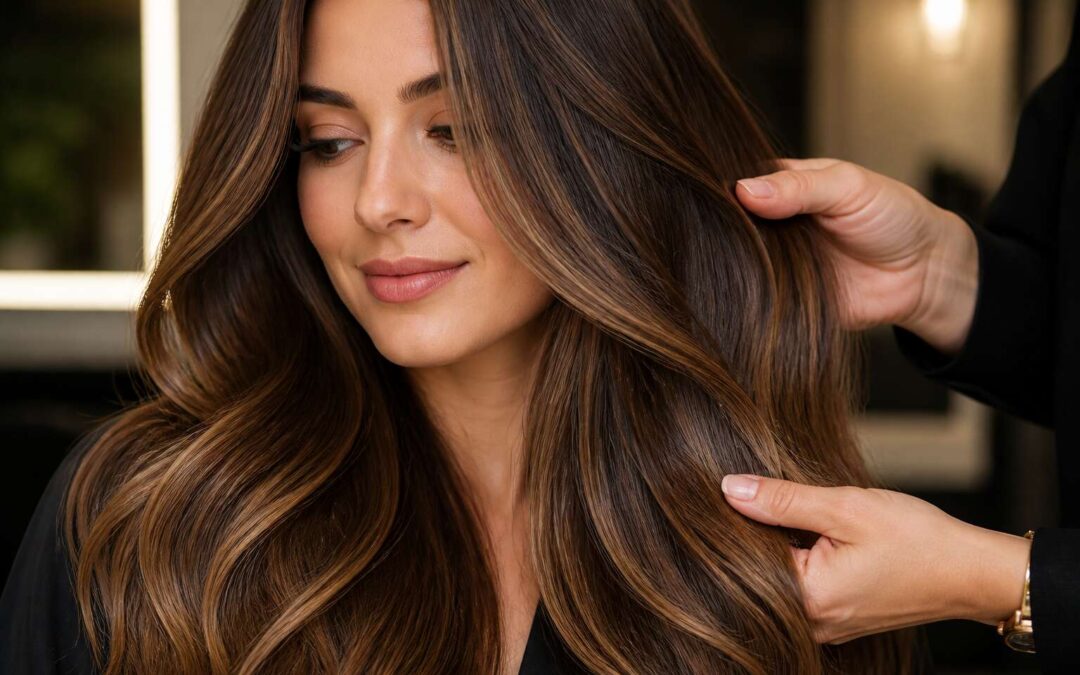
Understanding Hair Extension Materials
Human Hair Versus Synthetic Fibers
When you ask are hair extensions real hair, the strands hold the answer. Human extensions come from donors who sell or gift their locks. These wisps keep their cuticle layer, a protective shell that lets light dance across fibres. Synthetic versions mimic the look but miss that quiet life. They cannot drink moisture or bend under a styling iron with obedience.
Human hair behaves like your own, merely relocated. Synthetic material thrives on stiffness and uniformity. Consider these differences:
- Human hair accepts dye and heat with grace.
- Synthetic hair wrinkles or fuses near high temperatures.
- Human hair lasts over a year with careful ritual.
- Synthetic fibres fade and fray within months.
So are hair extensions real hair? Only the human ones. The synthetic impostors offer speed and price, but cannot replicate that living quality. The sun, humidity, and routine matter here. Your choice depends on your hair’s demands.
Where Human Hair Extensions Come From
Human hair extensions often start far from the salon. Some strands arrive from temple offerings in India, where devotees shave their heads as a symbolic act. Other locks come from individual donors who sell their ponytails to brokers. The process of gathering these strands determines the quality.
Single donor hair means every bundle shares one origin, creating a consistent texture. If the cuticle remains intact, the hair keeps its natural flexibility. But if acid baths strip the cuticle, the strands turn brittle. So when you ask, are hair extensions real hair, the answer depends on provenance. Common sources include:
- Religious donations made during ceremonies
- Private sellers who grow their hair specifically to sell
- Salon sweepings collected after cuts
Each source carries its own grade of integrity, from raw unprocessed lengths to mechanically sorted strands.
Virgin Hair and Its Unique Characteristics
Are hair extensions real hair? Only virgin hair answers with certainty. This hair has never touched dye, perm, or relaxer. Its cuticle remains a sealed mosaic of scales, repelling moisture and resisting tangles. The fibers mimic your own texture from root to tip because no acid bath has flattened them.
I feel the difference by running my fingers along the bundle. Virgin hair has a weight and springiness. It survives washing without turning straw-like. Installed, it behaves as if still growing. Burning a strand smells like scorched wool, not plastic. That scent proves keratin.
What sets virgin hair apart:
- Natural direction and elasticity remain intact.
- Color is uniform from a single donor.
- Lifespan exceeds processed hair by months.
When someone asks if extensions are real, virgin hair is the unmastered truth.
Remy Hair and the Importance of Cuticle Alignment
The term Remy carries real weight in the hair industry, yet few buyers understand its actual meaning. Remy hair refers to human strands collected with every cuticle layer facing the same direction. That alignment matters more than most people realize. When cuticles remain intact and parallel, individual fibers move together without friction. Tangling and matting become rare, and a simple comb can glide through without forcing anything.
The collection process demands constant care. Workers must gather hair in gentle bundles, never letting the strands twist or reverse. I have seen bundles that look perfect until the cuticles reveal their disorder. For anyone asking are hair extensions real hair, the answer often lies in this detail. Here is what to check:
1. The cuticle direction remains uniform along the entire strand.
2. The ends show no chemical stripping.
3. Running fingers down the hair feels smooth, never rough.
When buyers ask are hair extensions real hair, Remy standards give them a reliable measure. The cuticle alignment preserves the natural intelligence of the strand.
Non-Remy Human Hair and How Processing Affects Quality
Nearly 80 percent of inexpensive extension bundles have been chemically stripped of their cuticles. Non-Remy human hair, harvested without regard for direction, requires aggressive processing to appear pristine. Acid baths dissolve the natural outer layer. Silicone dips restore temporary slip. The hair becomes a manufactured product, not a natural one.
Processing rarely improves anything. I have unwrapped bundles that looked impeccable only to fall apart after one wash. When women ask are hair extensions real hair, the truthful answer is yes, but the quality has been engineered away.
Signs of heavy processing include:
- An unnaturally uniform shine across all strands.
- A plastic or chemical smell after wetting.
- Strands that tangle immediately after the first shampoo.
The distinction between Remy and non-Remy is not academic. It determines whether your investment survives its first month. The cortex, once exposed, offers no protection against friction, humidity, or daily brushing.
How to Tell If Extensions Are Real Human Hair
The Burn Test for Identifying Hair Fiber Types
To answer the question “are hair extensions real hair”, use a lighter and a single strand. Pluck one strand from the interior and hold it with tweezers over a fireproof surface.
Apply the flame for a second. Human hair reacts like protein. It curls, cinders, and emits a smoke that smells of burnt protein. The ash is soft and turns to powder when pressed.
Synthetic fibers melt and shrink away from the heat, forming a hard black bead. The odor is chemical and acrid from burnt plastic.
Here are the burn test cues:
- Human hair: curls, powdery ash, protein smell.
- Synthetic: melts, hard bead, plastic smell.
If the strand snaps and stinks of plastic, you hold a manufactured fiber, not human hair. The burn test directly answers are hair extensions real hair: if it melts, it’s synthetic.
Visual Inspection for Natural Cuticle Patterns
Visual inspection reveals cuticle patterns before any chemical test is needed. Real human hair has overlapping scales that lie flat, creating a smooth surface that reflects light evenly. Synthetic fibers have no cuticles at all, so they produce an artificial sheen.
Hold the extension up to natural light. Run your fingers along the shaft. Human hair cuticles catch slightly when stroked upward, resisting your touch. Synthetic strands feel uniformly slick!
A magnifying glass answers the question “are hair extensions real hair” with certainty. Examine individual strands for these signs:
– Imbricate scale patterns running consistently along the shaft
– Cuticle edges that lift slightly when stroked against the grain
– Light refraction that appears deep and varied
Intact, aligned cuticles create a subtle lustre. When you ask “are hair extensions real hair,” this visual test offers the first reliable clue. Manufactured fibers reflect a flat, monotonous glow.
Texture, Softness, and Feel Assessment
Run your thumb and forefinger along a single strand. Real human hair offers a specific resistance, a tactile roughness that synthetics cannot mimic. The answer to are hair extensions real hair lives in this friction!
Human hair feels dense between your fingers, with slight grittiness at the cuticle edge. Synthetic strands compress with uniform ease and spring back instantly. When you gather a lock in your palm, genuine hair holds its volume; manufactured fiber collapses into a stiff, lifeless mass.
Texture reveals more under water:
– Wet hair clumps naturally, while synthetics repel moisture and bead it away
– Real hair dries with a matte finish, not a plastic sheen
– Human hair retains its wave memory, while synthetics hold a fixed shape
The softness of human hair deepens after washing. Synthetic fibers stay static, resisting moisture and movement. This felt assessment, paired with earlier visual inspection, confirms whether are hair extensions real hair.
Price Point and Source Transparency as Trust Signals
Price reveals something important. Real human hair commands a premium because it is a finite, labour intensive material. If a vendor advertises 20 inch extensions for a price that barely covers a restaurant meal, you are almost certainly buying synthetic or processed blend. The answer to are hair extensions real hair often hides in that uncomfortable gap between cost and plausibility.
Source transparency separates genuine suppliers from opportunists. A trustworthy brand will name the origin country, describe the collection process, and explain whether the hair is single donor or gathered. They will not hide behind vague terms like “premium quality”.
- Ask for certificates of origin
- Check if the vendor lists processing steps
- Request close up photos of cuticles
When a company answers these questions directly, trust becomes evidence. When they evade, the price becomes a warning.
Popular Types of Human Hair Extensions
Clip-In Extensions for Temporary Volume and Length
Clip-in extensions remain a favourite among South African women who want instant volume without permanence. You part your hair, snap the wefts in place, and head out. This makes the question of are hair extensions real hair particularly important, because your strands must blend with your own texture.
The charm lies in flexibility. Wear them for a wedding, a braai, or a board meeting, then remove them before bed. They are also the most forgiving entry point for newcomers. Just check that the clips sit flat. A flush closure avoids that awkward ridge which betrays an amateur installation.
- Standard wefts deliver broad coverage for a dramatic lift.
- Halo wefts add gentle volume with zero clips at the crown.
- Hand-tied wefts feel lighter and move with natural ease.
Once you recognise that are hair extensions real hair truly depends on strand quality, I find clip-ins offer a wonderfully playful way to test a longer silhouette before you commit.
Tape-In Extensions for Semi-Permanent Wear
Tape-in extensions occupy a middle ground between clip-ins and permanent methods. They last several weeks, so the question of are hair extensions real hair becomes a matter of daily trust. If the wefts are not genuine, the deception surfaces during a Cape Town summer when humidity tests every strand.
Each weft carries a thin adhesive strip. Your stylist sandwiches your own hair between two wefts, and the bond holds until natural growth loosens it. The result lies flat, appealing to those who value discretion in professional settings. You can part your hair without exposing a telltale ridge.
- Maintenance requires a salon visit every six to eight weeks.
- Washing demands gentle technique.
- Heat styling should be handled with restraint.
The wearer forgets they are there, and so does everyone else. That comfort depends on the integrity of the hair itself, returning us to the central concern: are hair extensions real hair, and is this batch worth it?
Sew-In Weaves and Braid Base Requirements
A sew-in weave depends on the braid base beneath it. Your natural hair is braided flat against the scalp in cornrows. These braids carry every weft, so they must be smooth and firm. Needle and thread are used to sew the wefts directly onto the braids, not onto the skin. That setup spreads weight evenly and holds for weeks.
Clients often ask me, are hair extensions real hair? For sew-ins, the answer matters because synthetic wefts may fray under the tension of stitching. Human hair survives that stress. It keeps its texture, takes heat styling, and washes like your own hair.
- Clean, completely dry hair with no oil or cream.
- Braids small enough to lie flat against the head.
- Tension that is firm but never painful.
Get that foundation wrong, and even the best bundles will shift. When you wonder are hair extensions real hair, remember that the base makes or breaks the result. The bundle is only half the equation.
Fusion and Keratin Bonded Extensions
Fusion and keratin bonded extensions answer the question are hair extensions real hair with even more certainty. Each strand carries a keratin bond, a protein adhesive that melts under heat and locks onto a small section of your natural hair. The bonds sit close to the scalp, hidden near the root. A stylist applies them strand by strand, a process that takes hours, but the result moves naturally with every turn of your head.
These extensions require real human hair because synthetic fibers cannot survive the heat of the bonding tool. The keratin melts at controlled temperatures, and human hair holds its structure. In my experience, clients who choose fusion never go back. Your scalp remains free, no braids, no wefts, only individual strands.
Micro-Link and Bead Extensions for Flexible Styling
Micro-link and bead extensions answer are hair extensions real hair with a simple, mechanical approach. Instead of glue or heat, a stylist threads a small section of natural hair through a tiny silicone-lined bead, then crimps it shut with pliers. The bead sits flat against the scalp, invisible to anyone who does not run their fingers through your hair. Removal takes minutes, and the natural hair remains untouched.
Because there is no heat or adhesive, the same strands can be reused multiple times, which makes this method a favourite for clients who like to change their look often. The real human hair moves freely, so you can pull it into a high ponytail or sweep it into a side part without visible anchors. For anyone asking are hair extensions real hair, the answer becomes obvious the moment you feel the strands slide through your fingers.
– The application does not require braiding or weaving, so your scalp stays accessible for regular washing and conditioning.
– The beads are small enough to sit comfortably even on fine or thinning hair, offering volume without weight.
– Styling tools can be used at low heat near the beads, but the hair itself can withstand the same temperatures as your own.
Quality Grades of Real Hair Extensions
What 8A, 9A, and 10A Hair Grades Actually Mean
Are hair extensions real hair? The answer often hides inside a grade like 8A, 9A, or 10A. These labels are not regulated. They represent a supplier’s judgment of cuticle condition, shedding resistance, and overall lifespan. 8A hair usually shows some cuticle roughness and may tangle near the ends. 9A has fewer imperfections, with stronger strands and a softer feel. 10A hair, the premium tier, arrives with aligned cuticles and almost no breakage.
The grade directly changes your daily routine:
– Low grades require gentler washing
– Higher grades tolerate heat styling better
– 10A can last a year with proper care
Location also matters. Suppliers often grade Indian or Peruvian hair differently. Always request a physical sample before buying, since labels vary wildly.
Cuticle Preservation and Its Effect on Lifespan
Cuticle preservation determines how long real hair extensions remain smooth and wearable. When each strand keeps its protective outer layer, the hair holds moisture, reflects light, and resists daily friction from brushing and styling.
- Gentle washing keeps cuticles flat and calm.
- Avoiding excessive heat stops the scales from lifting.
- Proper storage prevents friction between strands.
This is why the question are hair extensions real hair matters on a deeper level. Real human hair demands real care. If the cuticle layer is stripped or damaged, the lifespan shortens dramatically. Tangles creep in by week three, and the ends split long before the year mark. High quality pieces preserve that architecture, so a small shift in maintenance adds months of wear.
Single Drawn Versus Double Drawn Hair Density
When people ask are hair extensions real hair, the drawing process often escapes attention. Single drawn hair passes through sorting once, so strands taper naturally toward the ends. Double drawn hair goes through a second pass, removing shorter broken strands. This creates an even thickness from root to tip.
The result shows up in density. Single drawn wefts look fuller at the top but thin out below the shoulders. Double drawn maintains its volume through the ends. For a client with fine hair, single drawn reduces bulk. For dramatic length, double drawn delivers a heavier silhouette.
- Single drawn: lighter weight, softer finish, ends taper after 40cm
- Double drawn: consistent volume, heavier feel, better for long styles
Density, measured in grams per weft, shifts between grades. Standard density works for daily wear. High density doubles the strands, changing how the hair moves and sits. So when you ask are hair extensions real hair, remember the drawing determines the final shape.
Natural Color Options Versus Chemically Treated Hair
Most shoppers assume every shade on the shelf comes from genuine strands. The truth about are hair extensions real hair hinges on how the color got there. Natural color hair is scarce. A donor with golden blonde or silver grey is hard to find, so those shades cost more. Chemically treated hair undergoes dyeing and bleaching to match popular palettes. That process opens the cuticle, reducing lifespan and changing how the hair reacts to styling tools.
Here is what separates the two:
- Natural shades keep the cuticle closed, offering longer wear and less tangling.
- Processed colors deliver exact matching but may dry out faster and need gentler care.
Examine the treatment history, not just the grade. A high grade with chemical processing still outperforms a lower grade natural, but only if the dyeing was done properly.
Caring for Human Hair Extensions to Maximize Longevity
Washing and Conditioning Routines for Real Hair Extensions
When you invest in real hair extensions, you are caring for strands that once lived. Washing them demands a gentle touch. Use lukewarm water and a sulfate free shampoo, working it downward along the cuticle to prevent tangling.
Conditioning is equally vital. Apply a moisturising conditioner from mid length to ends, leave it for two minutes, then rinse thoroughly. For those who wonder are hair extensions real hair, yes, and their porosity responds to regular deep conditioning. Here is a simple sequence:
- Detangle before every wash
- Rinse with cool water to seal cuticles
- Air dry on a silk towel
This routine preserves the shine and extends their life. Treat them as your own hair, and they will remain lustrous for months.
Heat Styling Guidelines and Protective Product Usage
Heat styling real hair extensions requires intention. The cortex holds moisture, and excessive heat displaces it, leaving the strand brittle. Apply a thermal protectant before using a flat iron or curling wand. Set the tool between 160 and 180 degrees Celsius; this range preserves elasticity without compromising shape.
South Africa’s bright sun intensifies the need for protective products. A marula or argan oil, applied from mid-length downward, creates a thin layer that absorbs UV rays and reduces heat impact. When people ask are hair extensions real hair, the answer appears in how they respond to styling: they scorch, dry, and split exactly like natural strands.
Protective care includes these forms:
- heat protectant sprays with polymers
- leave-in creams with UV filters
- sealing oils for the fragile ends
Proper Brushing and Detangling Techniques
When someone asks are hair extensions real hair, the answer appears in the act of brushing. Real strands resist and knot, remembering every wind and sleep. Synthetic fibers surrender easily, offering no memory. The struggle itself is proof.
Proper detangling demands patience and a steady hand. I have rescued many extensions from the brink of ruin. Use this sequence:
- Anchor the weft or tape with one hand, so the root feels no strain.
- Begin at the bottom centimetres, working out tangles with a wide tooth comb.
- Move upward slowly, never pulling through a snag with force.
The hair should never weep, break, or stretch. Treat it with the same gravity as the strands growing from your scalp, and it will endure.
Sleeping, Swimming, and Everyday Precautions
I have watched clients destroy beautiful extensions in a single night. The question are hair extensions real hair becomes urgent when you wake up to a matted disaster. Real strands demand ritual. They tangle with your pillow, your sweat, your tossing. Synthetic fibers stay indifferent.
Braiding the hair before bed is non negotiable. I use a low, loose braid that causes no pulling at the roots. A silk pillowcase reduces friction. Never sleep on wet extensions, the cuticle is vulnerable and will snag.
Swimming requires preparation. Wet your hair with clean water before entering a pool or ocean. After swimming, rinse immediately and apply a light leave in conditioner. Keep the length in a buff or twist during exercise.
Signs That Your Extensions Need to Be Replaced
Real hair extensions age. The question are hair extensions real hair becomes practical when you measure their lifespan. A quality set lasts six to twelve months with proper care. Without it, shedding and dullness appear within weeks.
The care routine is simple. Use sulfate free shampoo and lukewarm water. Condition from mid length to ends. Let extensions air dry whenever possible. Heat is the exception, not the rule! Handle the weft or tape line with care.
You will know replacement time arrives when:
– The hair feels dry and stringy even after conditioning.
– Shedding increases to the point where you lose multiple strands per brush.
– The color has faded, and the texture no longer matches your natural hair.
These signs tell you the hair has reached its end. Asking are hair extensions real hair is no longer the issue. The real issue is whether they look natural.
Common Questions About Real Hair Extensions
Can You Dye Human Hair Extensions?
Are hair extensions real hair? That question surfaces when a client in Johannesburg wants a new shade. Real hair takes colour while synthetic fibres do not. Once you confirm your weft is genuine, the next step is understanding how your specific set will react.
A virgin cuticle absorbs dye evenly. Remy hair, with aligned cuticles, performs similarly. But previously processed strands can absorb dye unevenly. So test a small weft first. It takes minutes and prevents disappointment! Keep these points in mind:
- Always use a strand test before full application.
- Match the target shade close to your base colour.
- Seek a professional if you are lifting more than two levels.
Darker bases need bleach to lift, and bleach shortens lifespan. A shift of one or two shades is safer than a dramatic transformation. If uncertain, let a professional colourist handle your wefts. Their fee is nothing compared to losing quality extensions.
Do Real Hair Extensions Damage Your Natural Hair?
Ask any hairstylist in Johannesburg whether extensions ruin natural hair, and the answer depends on application and aftercare! Weight and tension matter. Heavy wefts pull at the root. Bonded rows placed too close to the scalp create traction on fragile follicles. The question of are hair extensions real hair matters less than how they are worn. Real hair extensions can sit gently for months when fitted correctly. Installation method determines stress points. Your natural strand density affects tolerance. Maintenance routine dictates long-term health. Poor removal causes breakage. Rushing the process snaps strands. A professional who maps placement reduces risk. This is why the honest answer to are hair extensions real hair includes a warning about technique. Yes, they are real. But your own hair pays the price for shortcuts.
How Much Do High-Quality Human Hair Extensions Cost?
A client once asked me to match a price she found online, and the difference came down to what was inside the packet. The question of are hair extensions real hair surfaces when the quote looks too high. Yes, real human hair costs more because someone collected it, sorted it, and aligned every cuticle. A 10A double drawn bundle in Johannesburg sits between R2,500 and R4,500 depending on length. That price reflects the density and the fact that no synthetic fiber has been blended in.
Cheap options exist, but they are cheap because they skip the manufacturing steps that keep hair tangle free. Paying less means paying for fewer weeks of wear. When you ask are hair extensions real hair at that price point, the honest answer is sometimes only partially.
What Is the Difference Between Remy and Non-Remy Hair?
Many people assume any real hair extension behaves the same. Remy hair has its cuticles aligned in one direction, so each strand slides past the next without catching. Non-Remy hair comes from multiple donors or industrial processing, leaving cuticles pointing every which way. That misalignment causes the hair to tangle and shed quickly, even when the fiber is genuine.
So when you ask are hair extensions real hair, the answer is not the full story. Both Remy and non-Remy are real, but the engineering behind them changes everything. A 10A Remy bundle holds its alignment for months. A non-Remy bundle might feel soft in the shop because manufacturers coat it with silicone, but that coating washes away in weeks.
- Remy hair: cuticles aligned, longer lifespan, higher cost
- Non-Remy hair: cuticles mixed, needs chemical coating, lower cost