
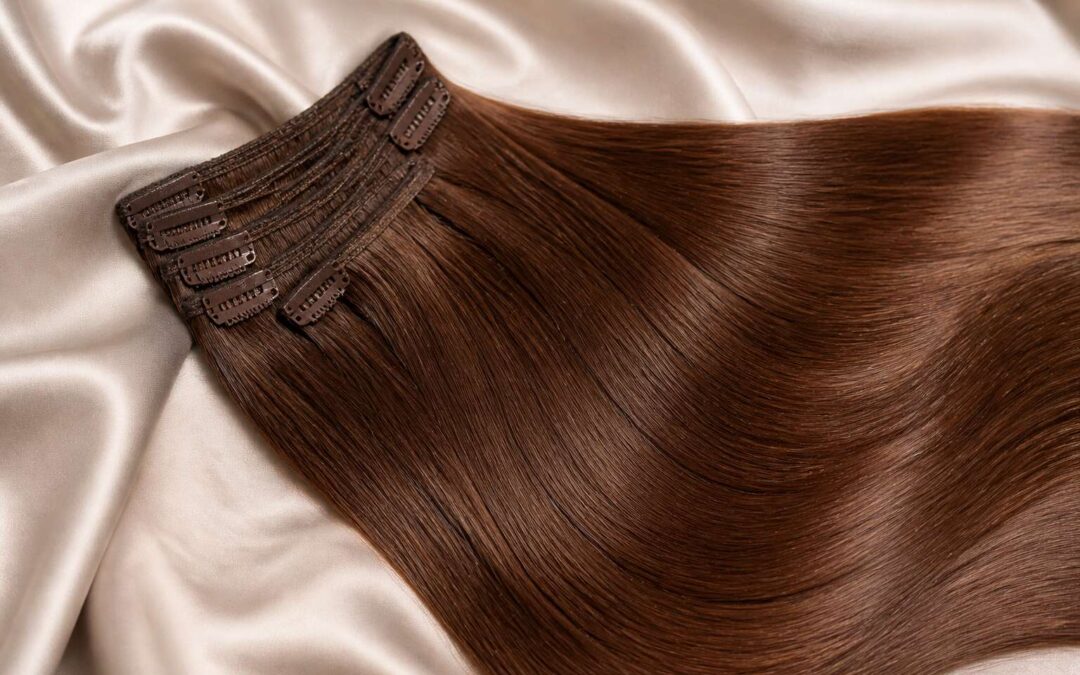
Understanding the 4K Standard in the Hair Industry
Defining 4K Quality in Hair Extensions
In the South African sun, a hair extension either holds up or it does not. The hair extensions 4k standard in the industry is not a pixel count; it is a measure of strand caliber and structural integrity. Defining 4K quality requires a stylist to examine cuticle alignment that survives our relentless humidity.
We demand verisimilitude. The hair must feel dense without being heavy. It should have a natural luster, not an artificial gloss. The true test lies in these particulars:
- Uniform thickness from root to tip.
- Zero shedding during a vigorous brush.
- A melting point that matches your natural texture.
For those chasing this benchmark, the test is simplicity. If it fools your own hand, it passes!
The Evolution of Hair Extension Technology
The global hair extension market now moves billions of rand annually, but the upgrade happened at processing plants. In the early 2000s, most Johannesburg stylists sourced from a single Durban wholesaler, and quality checks relied on hand-feel. Hair extensions 4k entered the lexicon as a response to clients who can spot a bad weft across a restaurant table.
Early technology depended on machine-cut ends and heavy silicone coatings that masked poor cuticle alignment. Those methods failed under South African conditions! Bleaching and humidity stripped the coatings within weeks. Manufacturers responded by refining the whole processing chain.
The visible changes in processing are concrete:
- Sorting strands by micron width instead of vague grade labels
- Aligning cuticle direction before chemical treatment
- Thermal sealing that preserves the natural lipid layer
Each adjustment came from documented failures. I have watched stylists push suppliers toward this standard, and the hair extensions 4k label became shorthand for that accountability.
Key Differences Between 4K and Standard Grades
One bad weft can cost a stylist three loyal clients. I have watched that arithmetic play out in Durban and Pretoria. The hair extensions 4k standard exists because hand-feel is not enough. Standard grades pass the touch test, yet they fail under scrutiny.
- Standard strands vary by up to 15 microns in diameter.
- 4K strands hold a tolerance under 5 microns.
- Standard cuticles are stripped by chemical coatings.
- 4K cuticles are aligned and thermally sealed.
These gaps explain why standard wefts tangle after one Johannesburg wash. Hair extensions 4k endure the humidity, the bleach, and weekly styling. The standard grade is a gamble. The 4K grade is a specification.
Why Premium Quality Matters for Natural Results
Some things reveal themselves only under pressure. The hair extensions 4k standard exists because a glossy advertisement cannot survive a Johannesburg afternoon.
Premium quality matters for natural results, since your scalp and your stylist both sense what the camera misses. The strand’s response to moisture, to heat, to the weight of your own lengths, determines whether the blend disappears or betrays you.
Understanding this standard requires a closer look at three observable outcomes:
- The hair moves as a single mass under natural light.
- The color stays honest through multiple washes.
- The ends resist splitting during daily brushing.
This is what hair extensions 4k actually verifies. For the wearer, it reduces the visible boundary between extension and natural hair. For the stylist, it means fewer corrections during installation.
The standard is not a marketing phrase. It is a specification that holds up under the sun, the pool, the salon sink.
Who Can Benefit from 4K-Quality Extensions
South Africa’s salon industry is not a monolith. The hair extensions 4k standard emerged to meet a specific demand: clients who need their hair to function as their own, not merely to photograph well. For the working professional in Sandton, the bride in Durban, the actress on set, this grade of hair extensions 4k reduces the guesswork. It tells the stylist that strands will behave predictably under tension and moisture.
Who benefits most? I have a practical list for you:
- Anyone who wears their hair down in humid conditions.
- Clients with delicate natural hair that cannot tolerate harsh bonding.
- Stylists who want predictable cutting and colouring results.
The standard creates a shared language between supplier and stylist. That reduces returns and wasted hours. For the everyday wearer, hair extensions 4k add certainty to a purchase that historically relied on trust alone.
Types of Ultra-High-Definition Hair Extensions
Remy Human Hair Extensions
Remy hair sets the benchmark, yet the term covers a spectrum. In hair extensions 4k, cuticle alignment matters, but processing method decides the outcome. I have watched women waste money on wefts labeled Remy that shed within weeks.
The real types you need to know:
- Virgin Remy: never chemically processed, natural pigment intact.
- Double-drawn Remy: uniform thickness from root to tip.
- Eco-processed Remy: dyed with sustainable methods.
Each type reacts differently to heat and moisture. Virgin Remy holds curls longer. Double-drawn gives density without weight. Verify the source before buying. Your scalp will thank you!
Virgin Hair Extensions
Walk into any extension stall in Durban or Sandton and count the boxes promising virgin hair. Roughly three out of ten will be lying. True virgin strands have never touched a chemical relaxer, a colour bath, or a steam-heated comb! In the world of hair extensions 4k, that purity is the difference between hair that flows naturally and hair that tangles by the second wash. I have watched brides discover this difference a week before their weddings.
Raw virgin hair is the first type. It arrives exactly as the maker harvested it, with the cuticle sealed around every shaft. No curl pattern has been forced and no shade altered. This grade is the most fragile, which is why it also carries the highest price.
Steam-processed virgin hair is the second type. Technicians use heat and water vapour to set gentle waves or curls. The strand remains chemically untouched, so it responds to styling tools the way raw hair does, yet the wearer gains flexibility without committing to a full chemical treatment.
The origin of the hair affects the daily experience:
- Brazilian virgin: heavy, glossy falls that take heat well.
- Peruvian virgin: thickest cortex, natural volume, good for fine hair.
- Malaysian virgin: finer shafts that hold straight styles in humidity.
- Indian temple virgin: soft wave, resilient feel, low upkeep.
These four sources dominate the hair extensions 4k market in South Africa, and each reacts differently to heat, moisture, and tension. Construction matters too. Hand-tied wefts lie flat against the scalp and spread weight evenly, which is why clients who request hair extensions 4k for special occasions often choose them. Machine wefts give density at a lower rate but can feel tighter in warm weather. Keratin-tip bonds provide the most movement and demand careful handling.
The common thread across all types is verification. A supplier who cannot show the cuticle structure, the batch history, and the origin papers is not selling virgin hair. In quality terms, documentation matters as much as the strands themselves.
Cuticle-Aligned Extensions
Cuticle alignment is the difference between hair that behaves and hair that tangles into a nest! For hair extensions 4k, every scale on every strand faces the same direction. When scales point every which way, hair knots, dulls, and sheds with abandon.
Single-drawn extensions pack a uniform thickness from root to tip. Double-drawn versions remove shorter hairs, giving fuller ends at a premium. I have tested both on South African heads, and they behave differently. For a bride sprinting through a May wedding, double-drawn wins. For a week-long conference, single-drawn handles the chit-chat without complaint.
Hand-Tied Wefts
A hand-tied weft is not machine pressed. It is built row by row, and that changes everything! For hair extensions 4k, the construction method dictates how the unit flexes and conforms. The market offers three distinct hand-tied types.
– Micro wefts are narrow, often under an inch, ideal for precision placement.
– Mini wefts offer a balance of coverage and movement for everyday wear.
– Full wefts maximize density for dramatic styling.
Each type carries the same hand-knotted core, but the width and thickness alter the weight distribution. In a Durban salon, choosing the right type of hair extensions 4k prevents headaches. Micro rows lay flat against the temples; full rows anchor securely along the crown. The texture remains undetectable, yet the engineering differs. So the real question is not which is “best”, it’s which suits the scalp’s topography. That is the mark of a considered installation.
Color-Infused 4K Extensions
Color changes identity! That is why color-infused hair extensions 4k demand honesty from the manufacturer. The pigment must penetrate the cuticle without destroying the alignment that gives hair its memory. In South Africa, where humidity tests every strand, this becomes trust.
Some color treatments are superficial. They coat the shaft until the first wash strips the illusion. Infused 4K color goes deeper. It alters the cortex while respecting the protein structure. The result is a consistency of light, a shade that holds its depth in shadow and sun. These hair extensions 4k are rebuilt with color as part of their architecture.
I have watched installations where color catches the ambient light and the entire head appears dimensional. That occurs when the extension is engineered for color, not dipped in it. The wearer feels the difference. There is a permanence to the choice, a commitment that mirrors deciding who you want to be.
Choosing the Perfect Extensions for Your Hair Type
Identifying Your Natural Hair Texture
Your natural hair texture dictates everything. Fine strands demand featherlight wefts, while coily hair thrives with heavier, more secure attachments. For hair extensions 4k, the cuticle alignment must match your own growth pattern. In South Africa’s humid climate, assessing porosity before selection is nonnegotiable.
Observe these attributes:
- Straight hair reflects light uniformly, requiring seamless blending.
- Wavy textures benefit from wefts with slight movement.
- Curly and kinky coils need extensions with tighter curl memory.
When you identify your curl pattern and strand diameter, the chosen extensions blend with your natural movement.
Matching Shades and Highlights Accurately
Selecting the perfect hair extensions 4k requires examining your colour palette under natural light. Indoor lighting distorts tones. Your highlights should map to the dimensional shifts found in your own hair. In South Africa, the sun intensifies warm undertones. A cool ash shade might appear brassy by midweek.
When matching shades, consider these markers:
- Your root depth versus mid-length tone
- The brightness of your face-framing strands
- The undertone visible in direct sunlight
Precision matters here. A mismatched highlight creates a visible boundary between your natural hair and the extensions. The cuticle alignment affects how light travels through the strands. That determines whether the colours truly merge or sit separately on the scalp.
Selecting the Ideal Length and Volume
When choosing hair extensions 4k, your natural strand diameter and growth pattern decide everything. Fine hair needs lighter wefts, while coarse hair carries more weight without stress marks. Volume follows the same logic; overloading the crown creates an unnatural silhouette.
A short bob demands less than 150 grams, but waist length hair often needs double that. Match the extension length to your longest layer, not your overall cut. That prevents the harsh step where extensions begin.
Always measure from the occipital bone to your desired endpoint. Consider your face width, the curvature of your hairline, and your daily styling demands. These extensions respond to tension differently, so your chosen grammage must mirror real density.
Consulting with a Professional Stylist
A single misjudged texture turns premium strands into an obvious addition. The stylist’s consultation exists to prevent this failure. They read your scalp’s topography, the direction each follicle grows, and the way your hair responds to moisture and tension.
The following factors guide their decision:
- Your strand’s elasticity under wet and dry conditions
- The density gap between your crown and nape
- Your history of chemical treatments and heat styling
Hair extensions 4k demand this level of scrutiny. The quality of the strand means nothing if the foundation rejects it. A skilled stylist matches the extension’s bulk and movement to your living hair, ensuring the two become indistinguishable. Your consultation should feel like an investigation, not a transaction.
Professional Application Methods for Premium Extensions
Tape-In Extensions
Professional tape-in application demands a meticulous hand. The stylist must part the hair in clean, even rows, allowing each weft to lie flat without tension. For hair extensions 4k, the adhesive tape requires gentle warming before pressure is applied, creating a bond that lasts eight weeks.
Each section is measured against the weft’s width to prevent bulging. The natural rhythm of application follows a careful sequence:
- Cleansing the roots to remove sebum.
- Slicing a precise parting.
- Sandwiching the weft between two thin layers of hair.
- Pressing the tape shut for a seamless hold.
Spacing between rows controls density and ensures the scalp breathes. When done correctly, the result moves naturally.
Keratin Bond and Fusion Methods
One hundred and fifty keratin bonds, each sealed with heat and pressure, build volume strand by strand. For hair extensions 4k, this method demands forensic attention to temperature. The stylist melts each tip to the precise point where the adhesive flows without compromising the cuticle.
Fusion methods extend this principle using a handheld warmer. Bonds are placed a centimetre from the scalp in a deliberate grid:
- Section the hair into even quadrants.
- Apply the keratin tip to a strand no thicker than a matchstick.
- Roll and press until the bond is smooth and round.
- Allow each bond to cool before proceeding.
This spacing lets the scalp breathe and avoids the tension that causes shedding. Keratin bonds offer longevity that tape-in methods cannot match, a durable solution for clients seeking hair extensions 4k that endure Johannesburg’s humidity and heat.
Sew-In Weave Techniques
Every sew-in begins with a decision: how much natural hair remains visible. In premium salons, this choice shapes the entire installation. The technique relies on tightly braided cornrows that follow the scalp’s natural contours. This base determines how the finished style swings and settles. A curved needle carries the thread through each braid and weft without touching the scalp, preserving blood flow to the follicles.
Weft placement follows the natural curve of the hairline:
– Layers sit staggered to avoid visible ridges.
– The crown receives added support to prevent slippage.
– Braid tension stays uniform across the occipital bone.
For hair extensions 4k, sew-in installations keep cuticle-aligned strands close to the head, encouraging natural movement. I have seen clients wear their hair extensions 4k this way for six full weeks without slippage, even under Johannesburg’s heat. The method also shields fragile natural hair beneath the weave, a practical advantage for long-term wear.
Micro-Link and Bead Applications
The bead applicator clicks with mechanical precision. Micro-link methods abandon adhesive and heat entirely, relying on the threaded ring’s grip. I have watched stylists in Johannesburg use this technique with hair extensions 4k, and the silence is revealing.
Each weft is anchored by a row of beads set against the scalp. The tension must remain uniform across the occipital ridge, or weight distribution fails. A skilled hand checks:
- Bead placement clear of the root to avoid follicle shock.
- An absence of twisting in the weft shaft.
- A smooth glide when the section is brushed.
The growing-out period feels mineral with beads. The wefts stay suspended, moving with the neck’s natural arc, but the bead holds its vigil until the growth cycle releases it. This method suits clients who demand zero heat yet require structural honesty.
Clip-In Options for Temporary Wear
Clip-in extensions offer the fastest route to transformation, yet the word “temporary” often misleads people into underestimating the skill required. A professional application for hair extensions 4k involves more than snapping a few wefts into place.
Stylists must map the head’s topography, positioning each clip at the parietal ridge or nape, where the weight will distribute evenly. The teeth of the clip must bite into firm hair, not fragile roots, or the whole unit slips by mid-afternoon.
- Matching the weft width to the section’s curve
- Checking for visible tell-tales in a ponytail
- Testing the closure’s security with a gentle tug
My favourite moment is watching a client’s face when they forget the extensions are even there. That is the real test of premium craft!
Selecting the Right Method for Your Lifestyle
A salon chair reveals more than hair type. It reveals your calendar, your hobbies, your patience for maintenance. Professional application methods for premium extensions must answer one question: how do you actually live? Hair extensions 4k demand precision, but the method must survive your reality. A morning runner cannot treat delicate bonds the same way as a desk-bound creative.
Consider these lifestyle variables:
- Frequency of swimming or intense workouts
- Time available for maintenance appointments
- How often you wash or style your hair
I have seen stunning installations fail because the client never disclosed their triathlon habit. The stylist’s expertise lies in matching technique to movement, humidity, and growth patterns. When the method aligns with your routine, the hair feels weightless. When it does not, every reflection reminds you of the mismatch. Professional application respects your life before it showcases the hair.
Maintenance and Care for Long-Lasting Extensions
Daily Brushing and Detangling Tips
Brushing your hair extensions 4k is a daily ritual, not a chore. Start with a wide tooth comb or a soft bristle brush. Work from the tips upward, holding the weft at the root to reduce tension. This prevents shedding and keeps the cuticle smooth.
Detangling requires patience. Use your fingers to break apart stubborn knots before introducing a brush. For matted areas, apply a light leave in conditioner. Never tug!
- Always brush in sections
- Use a detangling spray on wet hair
- Sleep with a loose braid
I have seen clients ruin premium pieces with harsh strokes. Remember that natural hair grows, but extensions do not. Your hair extensions 4k will last far longer with this simple daily routine.
Washing and Conditioning Best Practices
Consider this: 80 percent of hair extension damage occurs during washing, not styling. For hair extensions 4k, water requires careful handling. Begin by brushing thoroughly before wetting. Use lukewarm water, never hot. Apply a sulfate free shampoo along the weft, not the bonds. Let the suds travel downward rather than scrubbing.
Conditioning demands equal care. Squeeze out excess water, then apply a hydrating conditioner from mid shaft to ends. Avoid the roots. Leave it for three minutes. Rinse with cool water to seal the cuticle. Pat dry with a microfiber towel, never wring.
- Wash in a downward motion
- Use a clarifying shampoo once a month
- Always detangle before wetting
This regimen preserves the fusion points and prevents tangling. A client once told me her hair extensions 4k lasted nine months with this washing ritual.
Heat Styling and Protection Guidelines
Heat styling presents a different test for hair extensions 4k. The cuticle alignment that gives 4K hair its luminous quality holds up under moderate temperatures, but a flat iron can undo months of maintenance. A thermal protectant sprayed evenly before any tool touches the strands keeps the hair from turning dry and brittle.
Set your tool to moderate heat, never above 180 degrees Celsius. Work in small sections, moving the tool quickly along the length and avoiding the bonds entirely. Remember that humidity in Johannesburg or Cape Town changes how the hair responds.
When you style:
- Always apply protectant and let it dry completely before heating
- Choose lower heat settings for everyday styling
- Let the hair cool before brushing
Hair extensions 4k keep their softness when the cuticle stays sealed. A light oil applied to the mid shaft and ends keeps the surface calm without weighing down the strands.
Nighttime Care and Sleeping Habits
The velvety hush of night, when the world settles and dreams take flight, is also a time of quiet testing for your precious strands. Hair extensions 4k are an investment, and the care you bestow during these eight hours dictates their longevity. The nocturnal environment, with its friction against cotton and the weight of your own head, can unravel the neat alignment of the cuticle that defines their superior lustre. A satin or silk pillowcase becomes an essential ally. The smooth, frictionless surface allows your hair to glide and move naturally, preventing tangles and reducing the stress on bonds and wefts.
Consider the braid before you sleep, a loose plait that cradles the lengths and keeps them from becoming a chaotic nest. The goal is to secure the hair, not to pull it taut.
1. Gently detangle from the ends upward with a soft bristle brush.
2. Form a low, loose braid or a topknot, using a soft scrunchie.
3. Tuck any flyaways gently against the scalp with a light touch.
This bedtime ritual protects the perimeter of your style. When you wake, the hair extensions 4k will be less prone to matting, and the pattern you slept in will fall out with a simple shake, preserving the smooth, undisturbed flow you worked so hard to achieve. The hair remembers how it is treated, and a gentle night yields a graceful day.
Knowing When to Replace Your Extensions
Your hair extensions 4k demand a vigilant eye. I advise every client to examine the bonds and wefts once a fortnight. Product buildup at these points hardens the cuticle and dulls the shine. The strand creeps lower, and the grip weakens.
These markers announce that your extensions have reached their end:
- Bonds slide noticeably away from the roots.
- The weft sheds more than a few hairs per brushing.
- Ends look translucent and split past any repair.
- The hair refuses to hold a style.
When they appear, removal is the only reasonable course. Replacement delays place extra tension on your natural hair. I have witnessed the damage such delays cause. A fresh set, installed on a healthy foundation, restores that quiet confidence.
Styling Trends and Tips for Premium Hair
Natural Everyday Looks
Styling has moved past the stiff and structured. Hair extensions 4k blend so well that your everyday look can stay relaxed and believable. Premium pieces wear well in a simple ponytail or a loose braid without extra effort. The difference lies in how the hair responds to movement. It falls naturally, bounces with your stride, and holds a style without heavy product.
For a polished yet relaxed look, focus on texture rather than perfection. A slight wave adds dimension without looking overdone. Consider these approaches:
- Tuck the hair behind one ear for an instant frame that shows off the natural shine.
- Pull the hair into a low knot at the nape for a clean workday look.
These small choices let the quality do the work. Premium hair offers a foundation that supports your daily routine, not the other way around. That is the point of a natural look.
Volume and Length Transformations
Volume and length transformations have shifted toward architectural shapes. The modern wearer asks for gravity defying lift at the crown and a sweeping fall of hair extensions 4k that moves fluidly. Stylists sculpt the hair with invisible layering, placing wefts to create an internal structure that supports both weight and motion. The result is a transformation that feels integrated and natural. In premium installations, cuticle alignment allows the hair to catch light without glare, making the length appear richer.
As for current trends, I see three directions emerging:
- Softly blunt ends that still sway
- Face framing layers that begin below the chin
- U shaped cuts that add volume without bulk
These shapes rely on the natural density of 4K strands. Volume comes from the hair’s own body, not from teasing. Length becomes a statement when the ends remain healthy. Hair extensions 4k provide that foundation.
Braided and Updo Styles
Braided styles and updos behave differently when built on hair extensions 4k. The added weight changes how each section falls, so a braid that looks tight in the hand can loosen within an hour. I always recommend testing the braid tension before committing to the full pattern. A high bun benefits from the hair’s natural density, giving it a sculpted finish that does not require backcombing. Face framing pieces, when left out, soften the overall silhouette.
- Braid on slightly damp hair to reduce slippage
- Wrap the base of a ponytail with a thin strand to conceal elastic
For longer events, a twisted updo with exposed strand lines photographs well because hair extensions 4k reflect light evenly. The key is to let the hair’s own texture guide the shape rather than forcing it.
Color Experimentation Without Damage
The global shift toward bold colour choices has reached South Africa’s salons, yet many clients worry about compromising their investment. Premium hair extensions 4k, with their intact cuticle layers, absorb colour more evenly than standard grades. This means stylists can experiment with vivid tones without stripping the hair’s structural integrity.
One emerging trend is the “colour melt” that blends two contrasting shades directly on the weft. Another is “glazed finishing,” where a semi-permanent toner adds dimension without lifting the base. These techniques work because the hair’s porosity remains low.
Less permanent colour placements are also trending:
- Root smudging to soften regrowth lines
- Face-framing pastel streaks that reverse with a clarifying wash
- Iridescent overlays that shift under different lighting
Each method relies on the same principle: the cuticle stays sealed. With hair extensions 4k, experimentation no longer means sacrifice.
Accessorizing and Finishing Touches
A single accessory can transform a full head of hair extensions 4k from polished to unforgettable. I have watched stylists in Johannesburg and Cape Town thread delicate gold chains through loose ponytails and pin velvet ribbons beneath top layers. The result catches light without weighing down the wefts.
For finishing touches, consider these three moves:
- Clip sculptural barrettes at the temple for a sculpted silhouette
- Wrap a silk scarf around a low bun to protect the cuticle alignment
- Layer thin metal rings onto micro braids that frame the face
Each addition works with the hair’s natural movement rather than fighting it. The extensions stay the hero; the accessory simply punctuates the statement. That balance keeps every finish looking intentional.